
**Part 1: The Unseen Power of Hypnotic Posters**
Have you ever walked past a poster and felt an inexplicable urge to buy something or change a habit?
Visual cues can shape our decisions without a single word being spoken.
In today’s fast-paced digital world, we’re surrounded by images vying for our attention.
But what if some of these visuals do more than just catch your eye—they gently steer your mind?
I once tried placing a poster of a serene mountain landscape by my desk.
Within days, I noticed my stress levels dropping during work.
It’s hard to explain, but that simple image seemed to rewire my focus.
Could a piece of art really influence your brain that deeply?
Here’s the twist: hypnosis isn’t just about spoken suggestions or swinging pocket watches.
Non-verbal cues, like symbols and patterns in posters, tap directly into the subconscious.
Think of your mind as a garden—words are like seeds planted deliberately, while images are sunlight that nurtures growth without you even noticing.
Your brain’s reward system, driven by chemicals like dopamine (the “motivation molecule”), responds to visual stimulation as powerfully as it does to language.
So why do we underestimate imagery?
We often assume influence requires complex instructions or loud commands.
Yet, throughout history, cultures used symbols in rituals and art to evoke emotions and loyalty.
In the age of social media, we scroll past hundreds of images daily, unaware of their subtle pull.
Let me share a quick story.
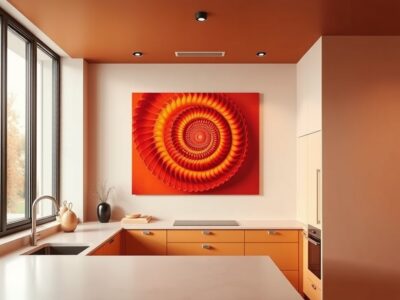
A friend hung a poster with abstract, spiraling designs in her kitchen.
She didn’t think much of it until she realized she’d started drinking more water—just because the poster’s colors reminded her of a cool, refreshing lake.
That’s the gentle power of subconscious messaging: it feels like your own idea.
But wait—does this mean we’re being controlled?
Not at all.
Subliminal methods work with your brain’s natural wiring, not against it.
They’re like a nudge rather than a shove.
Have you ever caught yourself humming a tune after seeing an ad?
That’s your mind playing with patterns it absorbed visually.
By blending art with psychology, hypnotic posters offer a quiet way to reinforce positive habits.
Stay curious, and in the next part, we’ll explore how to design these visuals for everyday benefits.
What’s one image that always makes you feel calm or energized?
Details
A friend hung a poster with abstract, spiraling designs in her kitchen, and within a week, she found herself feeling more creative while cooking.
She didn’t consciously connect the dots until I pointed out how those patterns might be nudging her brain’s associative networks.
Visual elements like spirals can evoke a sense of expansion and flow, subtly encouraging open-minded thinking.
This isn’t magic—it’s neuroscience in action, where our brains process imagery faster than text, triggering emotional and cognitive shifts.
Consider how colors in posters play a role; warm hues like red and orange can boost energy and alertness, while cool tones like blue and green promote calm and concentration.
Patterns, too, matter—repetitive geometric shapes can induce a meditative state, making them ideal for spaces where focus is key.
By strategically placing such visuals in your environment, you’re essentially curating your mental landscape without effort.
It’s like having a silent partner in personal development, one that works in the background to reinforce positive habits.
The key is intentionality; choose posters that align with your goals, whether it’s productivity, relaxation, or inspiration.
For instance, images of nature scenes can reduce stress by tapping into our innate biophilia, the human tendency to connect with living systems.
Abstract art, on the other hand, might spark innovation by challenging the brain to find new patterns and meanings.
Test it out yourself—observe how different visuals in your space affect your mood and actions over time.
In a world saturated with digital noise, these analog tools offer a refreshing way to reclaim control over your mindset.
They don’t require apps or subscriptions, just a bit of thoughtfulness in selection and placement.
Start small, experiment with one poster, and notice the gradual shifts—it’s a low-cost, high-impact approach to self-improvement.
Remember, the most profound changes often begin with the simplest adjustments to our surroundings.
Summary
Visual elements in posters can subtly guide our thoughts and behaviors, much like a gentle current steering a boat.
Colors and patterns work on our subconscious, evoking emotions or states of mind without our conscious awareness.
For instance, warm tones might energize us, while cool shades soothe, and repetitive designs can lull the brain into a focused calm.
This isn’t about manipulation but about harnessing the brain’s natural responsiveness to imagery for personal benefit.
By choosing posters that align with our goals, we create an environment that supports our well-being effortlessly.
It’s a quiet, continuous influence that requires no active effort, just mindful selection.
Over time, these visual anchors can help cultivate habits or moods we desire, making our spaces allies in our daily lives.
Reflect on the images around you and how they might be shaping your inner world.
Embrace this subtle art to foster a more intentional and peaceful existence.


Comments